
HOTEL GUIDE
Thailand Train Travel Guide: Sleeper Trains, Classes & Booking
How to ride Thailand’s trains: choosing sleeper classes, booking with SRT or trusted agents, what to expect on overnight services, safety and packing advice.
Thailand train travel is one of the most relaxed, scenic and practical ways to cross the country. This guide explains the main long-distance routes, how to book sleepers and day seats, what each class offers, plus practical onboard, luggage and safety tips for international travelers. Read the booking and timing notes carefully—some rules and advance windows change and should be checked on the official D‑Ticket site.
Key Takeaways
- Book early on SRT’s D‑Ticket (or trusted resellers) for popular sleepers; some services open up to 90 days in advance—verify per route.
- Choose class by comfort needs: 1st‑class private cabins > 2nd‑class sleepers (best value) > 3rd‑class basic seats.
- Bring snacks, earplugs and a padlock; allow time buffers—delays are common on long routes.
Quick network overview & when trains make sense
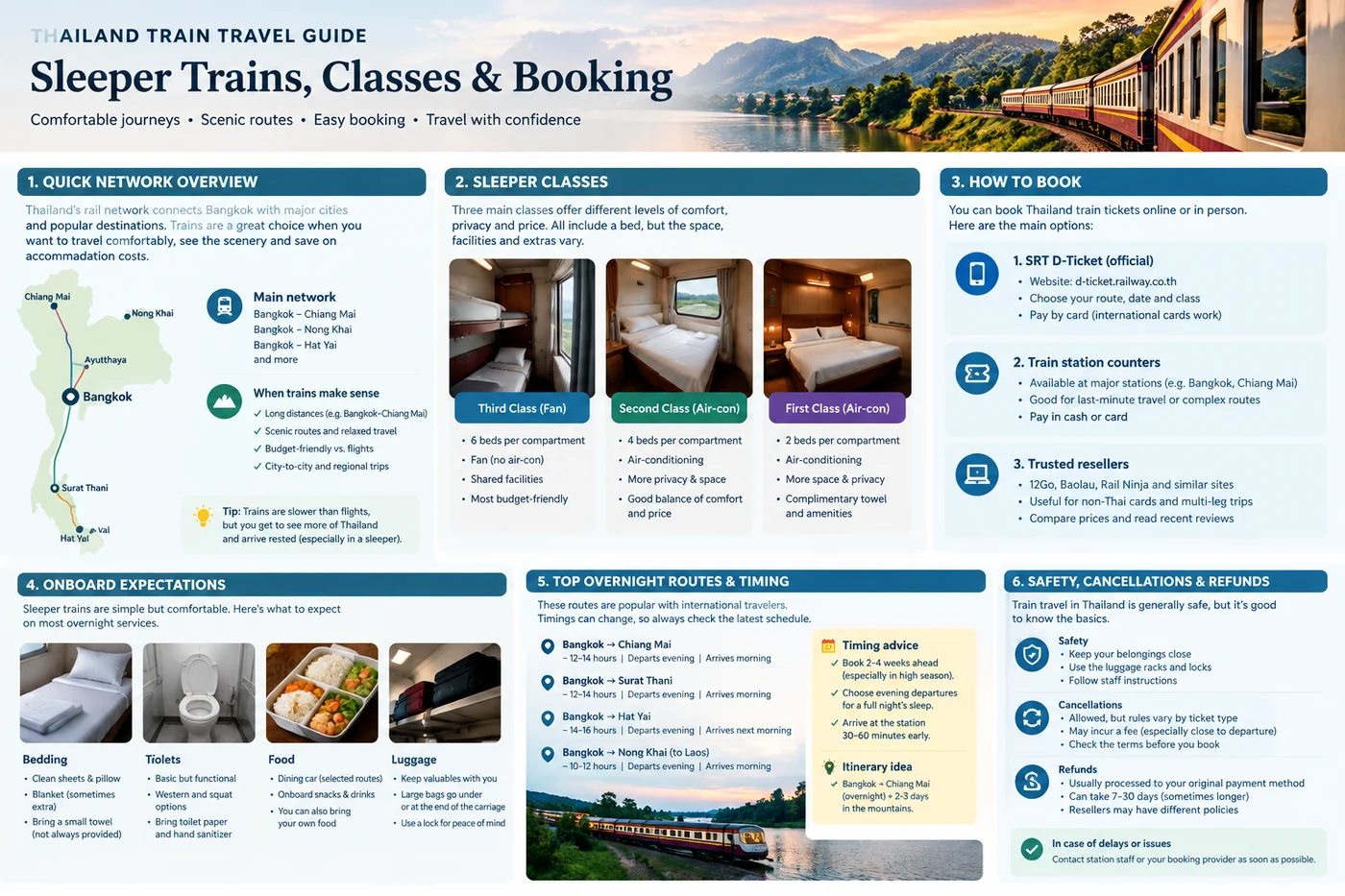
Thailand’s rail network radiates from Bangkok and runs north to Chiang Mai, northeast toward Nong Khai and Ubon Ratchathani, and south to Surat Thani and Hat Yai (the gateways to the islands). Trains are ideal for city‑center-to-city‑center travel, overnight trips that save a night’s hotel, and scenic daytime journeys. For very tight schedules or remote southern islands, low‑cost flights or express buses may still be faster—allow schedule buffers if you must connect to tours or flights after a train.
Thailand train travel — Sleeper classes and what to expect
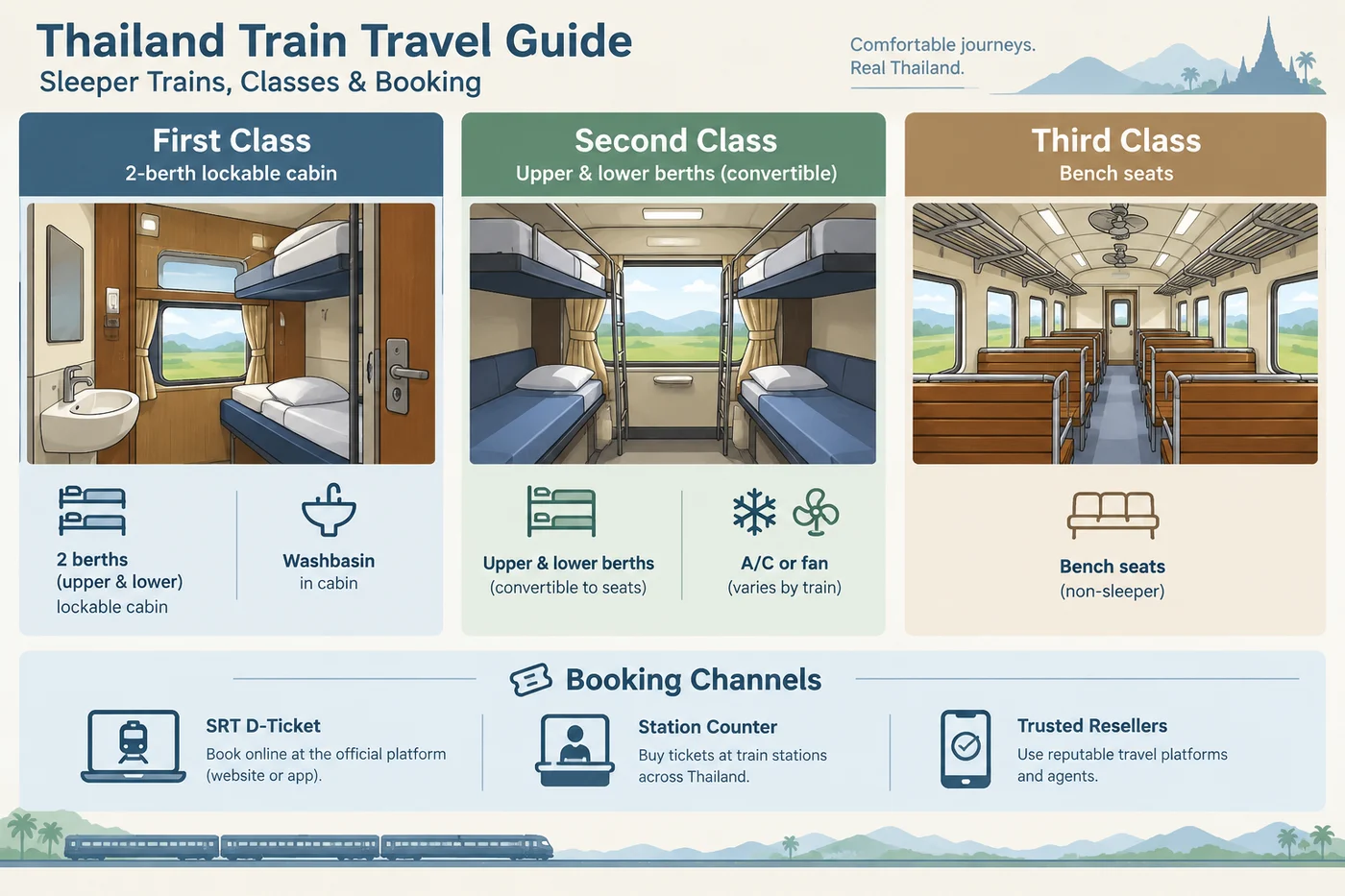
SRT categorises passenger accommodation into three broad classes. First Class: lockable 2‑berth private cabins on selected Special/Express trains, sometimes with a washbasin; good for couples or privacy-seeking travellers. Second Class: the most common sleeper option—coaches convert from seats to upper and lower berths at night and come in air‑conditioned or fan forms. Third Class: basic bench or seated coaches, usually fan‑cooled and cheapest. Not every route carries every class; bedding is usually provided on sleepers, but standards vary by train and staff will make up berths at night. Expect mixed toilet quality and limited or no restaurant cars on many services.
How to book: SRT D‑Ticket, counters and trusted resellers
Official bookings are handled by the State Railway of Thailand’s D‑Ticket portal and app (dticket.railway.co.th), station ticket counters and the SRT call centre (1690). D‑Ticket requires account registration and immediate card payment; some foreign cards can be rejected, so have a backup plan. Advance‑booking windows are tiered by route length—SRT opened 90‑day booking for selected long services in 2024, but rules can change, so always verify the current window on D‑Ticket. Reputable third‑party resellers (e.g., 12Go or Baolau) provide English interfaces and international card payment for a fee—compare availability and fees with the official site. For last‑minute travel, buy at the station but expect limited choices on popular sleepers.
Onboard expectations: bedding, toilets, food and luggage
Sleeper tickets generally include basic bedding; staff convert seats into berths for evening departures. Catering varies widely: only a few Special/Express trains have restaurant cars—many rely on station vendors or trolley sales, so bring snacks for long journeys. Toilets range from reasonable to basic; carry hand sanitiser and tissues. Luggage: SRT does not operate airline‑style checked baggage; you can keep one large suitcase and a carry‑on near your berth or on overhead racks. Major stations usually have left‑luggage services and parcel‑by‑rail freight options for large items. Lock small valuables and consider a strap or cable for bulky bags.
Top overnight routes, timing advice and itinerary ideas
Popular tourist sleepers: Bangkok–Chiang Mai on the northern line, Bangkok–Surat Thani or Hat Yai for southern island connections, and Bangkok–Nong Khai or Ubon Ratchathani in the northeast. Overnight trains save a night’s accommodation and add local flavour—use them to wake up in Chiang Mai or to meet early island ferries from Surat Thani (but check ferry schedules carefully). Because long‑distance trains commonly run late, avoid planning tight onward connections; if you must, allow at least a half‑day buffer or, ideally, a night in your arrival city. For scenic day travel, consider daytime express trains on the southern coast or the northern daylight sections.
Safety, cancellations and refunds
Rail travel in Thailand is generally safe, but standard precautions apply: lock valuables, keep passports in a money belt while sleeping and choose lower berths if you prefer easier access. Refund and cancellation policies are set by SRT and resellers—fees and cut‑offs vary; check the terms on D‑Ticket or with the agent you used. Because delays are common, don’t book tight same‑day connections after overnight trains.
Practical Tips
Pack: light sleep kit (eye mask, earplugs), small padlock, wet wipes and tissues. Choose lower berth if mobility or frequent bathroom trips matter. If paying online, have a backup card or use a reputable reseller. Buy food before departure if travelling after station vending closes. Photograph your ticket and carriage number on arrival.
Important Considerations
Booking windows and payment rules change—always verify current rules on the official D‑Ticket site. Don’t assume a dining car on every train. Allow generous time buffers for onward travel after overnight services.
Planning more of your trip? Browse our
Thailand Travel Guides
for more practical Thailand travel information.
Final Thoughts
Trains are one of the most atmospheric and cost‑effective ways to travel Thailand, especially if you want to save time and sleep en route. Use official channels where possible, pick the class that matches your comfort needs, and travel with sensible packing and timing buffers. For route inspiration, see HotelForU’s Chiang Mai and southern islands guides to combine rail travel with local stays and tours.
Sources & Further Reading
- SRT D‑Ticket official portal
- Public Relations Department — SRT 90‑day booking announcement
- Seat61 — Thailand train travel overview
Transport schedules, fares and operating rules can change. Always verify time-sensitive details with the official operator before travel.